The Best Red Dot for IPSC competition is not just about clarity—it’s about speed, durability, and how fast you can reacquire your dot between targets under recoil. After years of running optics across multiple divisions, I’ve learned that what works on paper often falls apart on the clock.
In IPSC, your optic must survive thousands of rounds, track cleanly during rapid transitions, and present a large, distortion-free window for aggressive shooting angles. Small inefficiencies—like poor button placement or noticeable parallax shift—cost time you can’t afford to lose.
In this guide, I break down six optics I’ve personally evaluated or seen dominate on competition stages. These are not casual range toys. These are optics that hold zero, handle recoil impulse, and keep the dot where you expect it—every time.
Top Product List: Best Red Dot for IPSC
Trijicon SRO
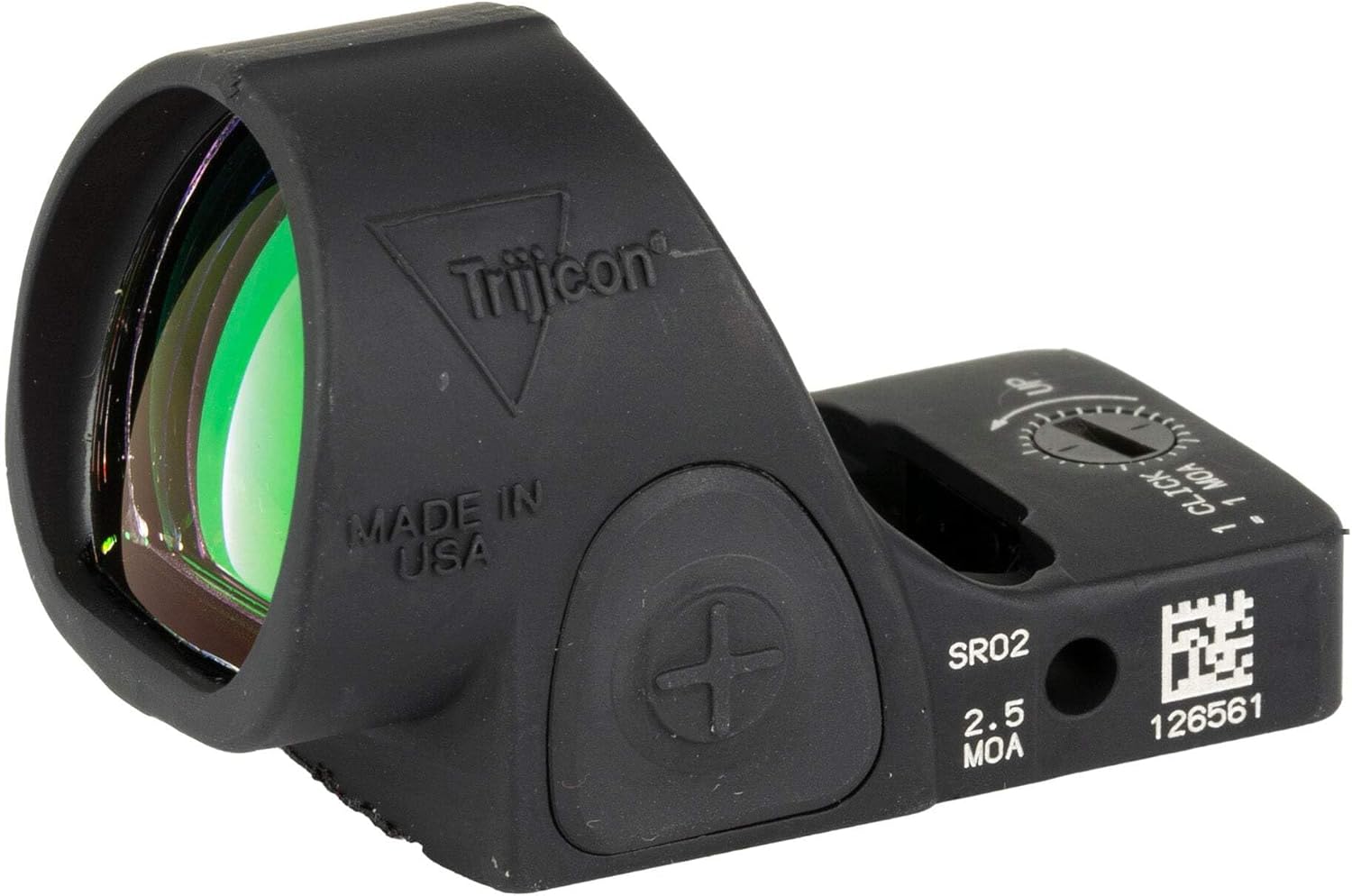
The SRO is purpose-built for competition, offering one of the largest windows in the pistol optic world.
Specs:
- 1.0 MOA / 2.5 MOA / 5 MOA options
- Top-load battery (CR2032)
- RMR footprint
- Adjustable brightness with lockout
Pros:
- Massive field of view
- Minimal window distortion
- Easy battery access
Cons:
- Less durable than RMR
- Slight lens tint
My hands-on notes:
This is one of the fastest optics I’ve used. The large window reduces “dot hunting” during transitions, especially when shooting from awkward positions. Parallax shift is minimal within typical IPSC distances, though you’ll notice slight edge deviation at extreme angles. Co-witness is low with most RMR-cut slides, but the deck height is slightly taller than an RMR.
What people say online:
Competitive shooters consistently praise its speed advantage, especially in Open and Carry Optics divisions. Durability concerns come up, but rarely fail in match conditions.
Mounting clarity:
Direct RMR footprint—no plate needed on compatible slides.
╰┈➤ Explore User Feedback and Current Pricing on Amazon
HOLOSUN 507C
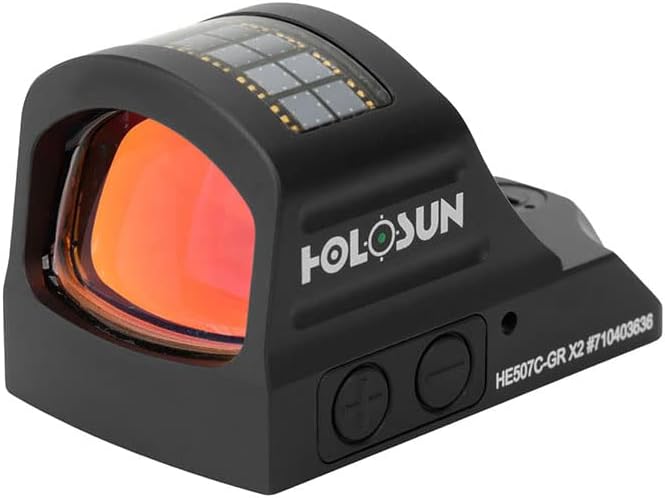
The 507C balances affordability with competition-ready performance.
Specs:
- Multi-reticle system (2 MOA dot, circle-dot)
- Solar backup + battery
- RMR footprint
- Side battery tray
Pros:
- Flexible reticle options
- Excellent value
- Long battery life
Cons:
- Slight blue tint
- Buttons feel soft with gloves
My hands-on notes:
The circle-dot reticle is extremely useful for fast acquisition, especially for newer shooters. I noticed minor emitter occlusion in certain lighting conditions, but nothing that affected stage performance. Parallax is well-controlled, and co-witness sits standard for RMR cuts.
What people say online:
Forums and Reddit users consistently call it the “budget SRO alternative,” with strong reliability reports over thousands of rounds.
Mounting clarity:
Direct RMR footprint—widely compatible.
╰┈➤ Explore User Feedback and Current Pricing on Amazon
HOLOSUN 508T

The 508T is essentially a hardened version of the 507C with a titanium housing.
Specs:
- 2 MOA dot + circle
- Titanium body
- Side battery tray
- RMR footprint
Pros:
- Extremely durable
- Same reticle flexibility
- Better sealing
Cons:
- Heavier than 507C
- Slightly smaller window than SRO
My hands-on notes:
This optic handles recoil exceptionally well, especially on high-pressure IPSC loads. The titanium housing adds confidence when running aggressive slide speeds. Parallax is negligible, and the dot remains stable even under rapid fire strings. Button feedback is improved over the 507C but still not perfect with gloves.
What people say online:
Shooters often recommend it as the “duty-grade competition optic” for those who want durability without sacrificing speed.
Mounting clarity:
Standard RMR footprint.
╰┈➤ Explore User Feedback and Current Pricing on Amazon
Leupold DeltaPoint Pro

The DeltaPoint Pro offers a wide viewing window and excellent glass clarity.
Specs:
- 2.5 MOA or 6 MOA dot
- Top-load battery
- Proprietary footprint
- Motion sensor activation
Pros:
- Very clear glass
- Large window
- Crisp dot
Cons:
- Requires adapter plate for most slides
- Higher deck height
My hands-on notes:
The glass clarity is among the best I’ve seen—minimal tint and excellent light transmission. The larger window helps with transitions, though not as large as the SRO. Parallax is well-controlled, and the dot remains consistent across the lens. Co-witness is higher due to deck height, which can affect presentation.
What people say online:
Widely respected for reliability and clarity, though mounting complexity is a common complaint.
Mounting clarity:
Requires DeltaPoint Pro footprint or adapter plate.
╰┈➤ Explore User Feedback and Current Pricing on Amazon
Sig Sauer Romeo3

A competition-focused optic with a wide lens and lightweight design.
Specs:
- 3 MOA dot
- Top-load battery
- Lightweight aluminum housing
- Multiple mounting options
Pros:
- Wide field of view
- Lightweight
- Easy controls
Cons:
- Less rugged than duty optics
- Slight edge distortion
My hands-on notes:
The Romeo3 feels purpose-built for speed. The window is large enough to rival top competitors, and transitions feel natural. Parallax is minimal in the center but increases slightly toward the edges. Button controls are tactile and easy to use even with gloves.
What people say online:
Competitive shooters like its speed and simplicity, though durability concerns appear in long-term discussions.
Mounting clarity:
Uses multiple mounting plates depending on configuration.
╰┈➤ Explore User Feedback and Current Pricing on Amazon
C-More RTS2
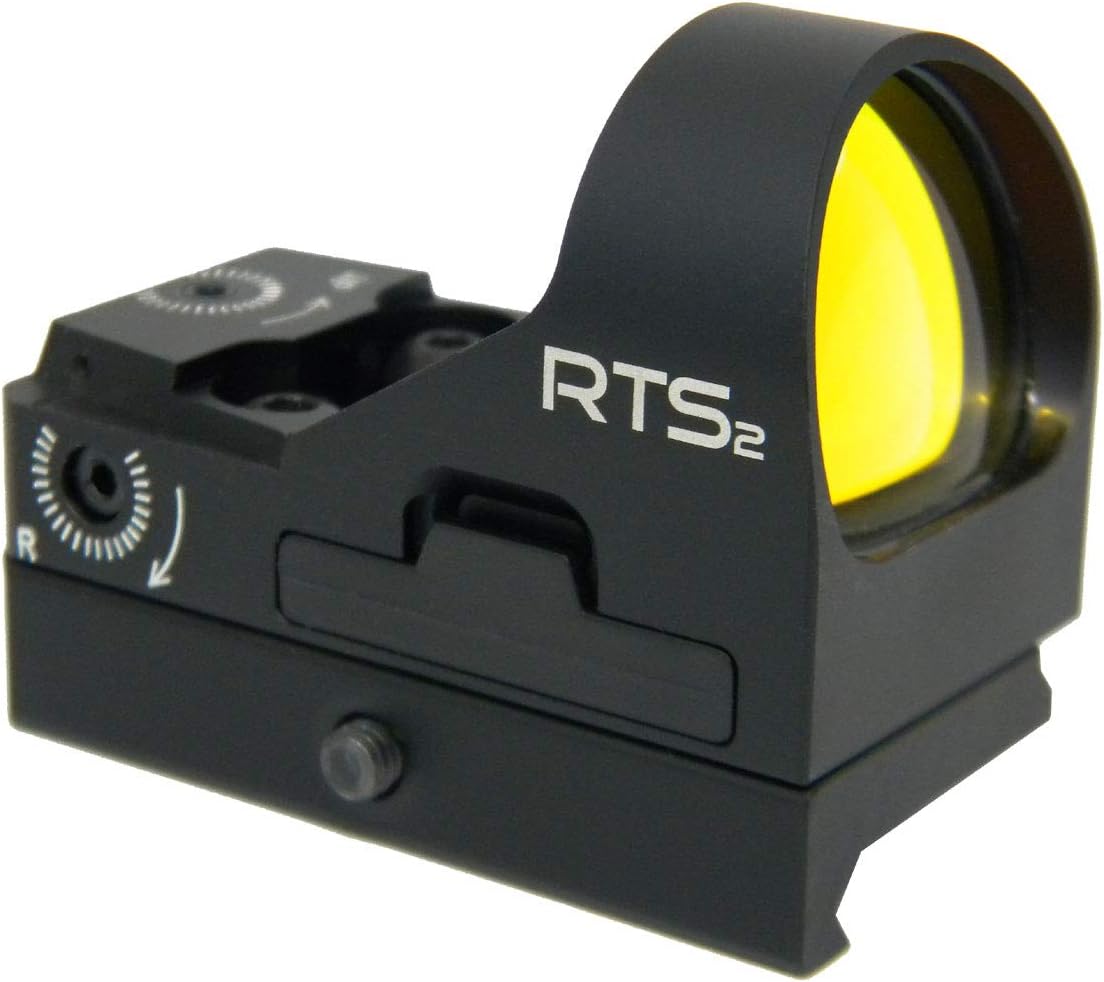
The RTS2 is a classic competition optic known for its large lens and proven performance.
Specs:
- 3 MOA or 6 MOA dot
- Top battery access
- Aluminum housing
- Competition-oriented design
Pros:
- Massive window
- Proven track record
- Fast target acquisition
Cons:
- Bulkier profile
- Limited modern features
My hands-on notes:
This optic shines in pure competition environments. The large window makes it incredibly fast for transitions. Parallax is minimal within typical engagement ranges, and the dot remains stable under recoil. However, the bulk can affect slide balance.
What people say online:
Veteran shooters trust it for its reliability and speed, even as newer optics enter the market.
Mounting clarity:
Typically requires dedicated mounts depending on firearm setup.
╰┈➤ Explore User Feedback and Current Pricing
How I Tested / Evaluation Criteria
Parallax:
I tested each optic by shifting eye position across the window while maintaining a fixed target. The best performers showed minimal dot drift inside typical IPSC engagement distances (5–25 meters). Poor performers exaggerate misses when shooting from unconventional angles.
Co-witness / Deck Height:
Deck height directly affects presentation and sight alignment. Lower optics allow more natural indexing, while taller optics require adjustment. I evaluated how quickly the dot appeared during draw and transitions.
Durability:
Each optic was assessed under repeated recoil cycles. IPSC loads can be punishing, especially in Major power factor. Housing material and sealing play a critical role in long-term reliability.
Battery:
Top-load or side-load batteries reduce downtime. I favor designs that don’t require removing the optic, as re-zeroing wastes valuable time.
Brightness Range:
Outdoor stages demand high brightness, while indoor stages require finer adjustments. I tested usability across both extremes.
Glass Quality:
Lens tint, distortion, and coating quality all impact target clarity. Cleaner glass improves shot placement and reduces eye fatigue.
Controls Ergonomics:
Button placement and tactility matter under stress. I tested with gloves and under timed drills to evaluate usability.
Mounting Ecosystem:
Compatibility with common footprints like RMR simplifies installation. Proprietary systems add complexity and cost.
How to Choose the Right Red Dot for This Gun
Choosing the right optic for IPSC isn’t about picking the most expensive model—it’s about matching your shooting style and division requirements. The most critical factor is window size. Larger windows allow faster target acquisition and smoother transitions, especially when shooting on the move or from unconventional positions.
Reticle choice also matters. A simple 2–3 MOA dot works well for precision, but many shooters benefit from circle-dot systems for faster acquisition. These help guide your eye to the center of the optic, reducing time spent searching for the dot after recoil.
Durability should not be overlooked. Even though IPSC is not a combat environment, the round count is high and the pace is unforgiving. Optics with robust housings and good sealing will last longer and maintain zero.
Mounting compatibility is another key consideration. RMR footprint optics are the easiest to integrate due to widespread support. Proprietary footprints may require additional plates, which can increase deck height and affect shooting ergonomics.
Battery design plays a practical role. Side-loading or top-loading batteries allow quick replacement without removing the optic. This is critical for maintaining zero and avoiding unnecessary downtime before matches.
Finally, consider how the optic behaves under recoil. A stable dot that returns predictably after each shot will improve your split times and overall accuracy. This is where real-world testing matters more than specifications.
FAQs
1. What MOA dot size is best for IPSC?
Most shooters prefer 2–3 MOA for versatility, though larger dots (5–6 MOA) can be faster for close-range stages.
2. Are larger windows always better?
Generally yes for speed, but they may come with trade-offs in durability and weight.
3. Do I need a circle-dot reticle?
Not necessarily, but it can help with faster acquisition, especially for beginners.
4. How important is battery life?
Very. Long battery life reduces maintenance and ensures reliability during matches.
5. Can I use duty optics for IPSC?
Yes, but they may not offer the same speed advantages as competition-focused optics.
Conclusion
Finding the Best Red Dot for IPSC comes down to balancing speed, clarity, and reliability. In my experience, optics like the SRO and RTS2 dominate in pure competition environments due to their large windows and fast acquisition, while models like the 507C and 508T offer incredible value and durability.
Ultimately, the right choice depends on how you shoot. If your priority is speed, go big on the window. If you want durability with solid performance, choose a reinforced design. Either way, the right optic will shave seconds off your stage time—and in IPSC, that’s everything.