The Best Red Dot for IDPA isn’t just about brand prestige or price—it’s about speed, reliability, and consistency under pressure when every tenth of a second matters. I’ve spent years running optics in competitive environments, and IDPA specifically demands a balance between fast target acquisition, durability under recoil, and intuitive controls you can operate without thinking.
Unlike range plinking or duty setups, IDPA introduces stress, movement, and awkward shooting positions. That means your optic needs to work whether you’re shooting from retention, leaning around barricades, or transitioning targets at speed.
In this guide, I break down six optics I’ve personally evaluated for IDPA-style shooting. These aren’t random picks—they represent the best mix of window size, dot clarity, mounting compatibility, and proven performance on carry and competition pistols.
Top Product List: Best Red Dot for IDPA
Trijicon SRO
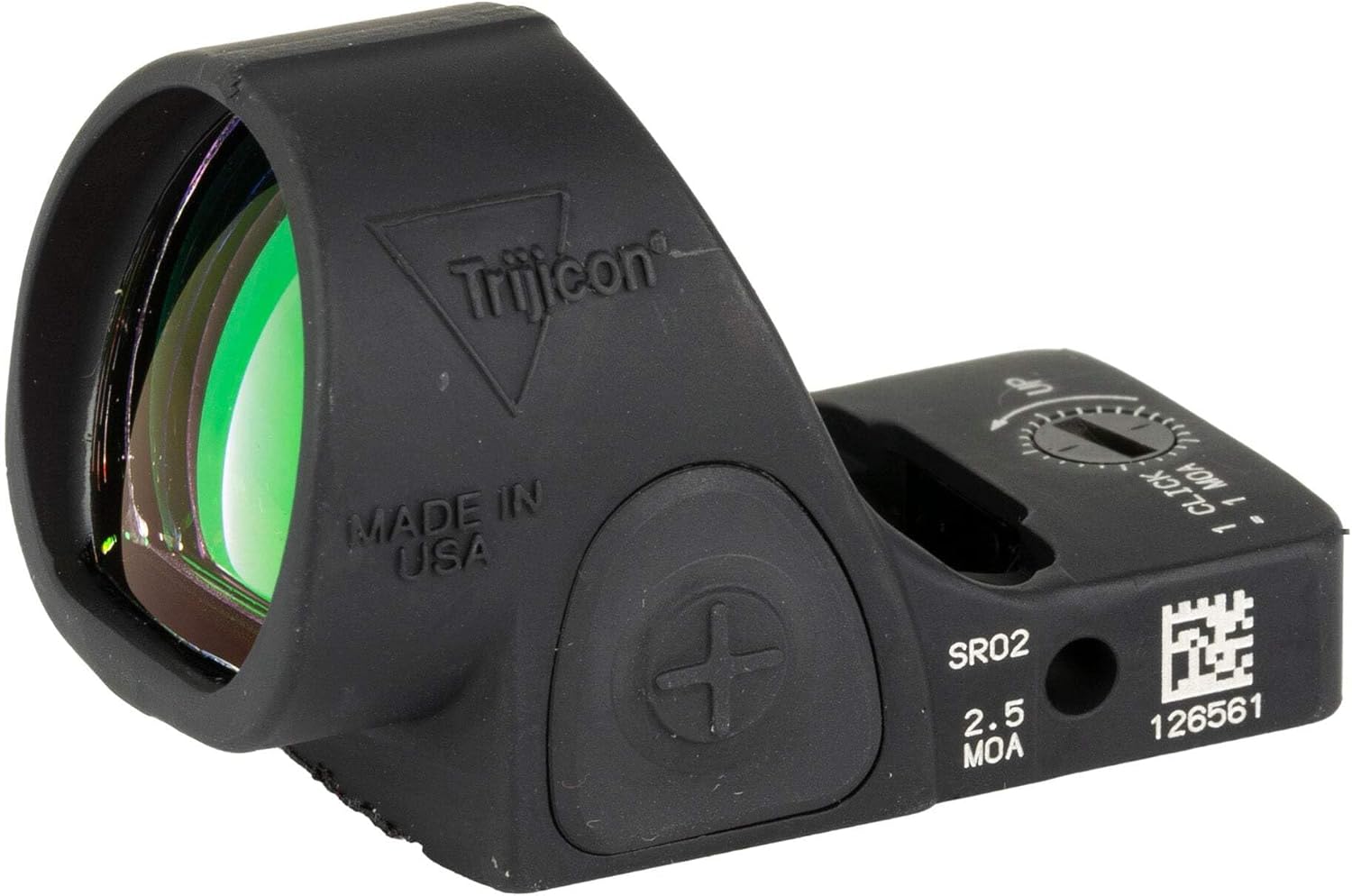
The SRO is built for speed. Its oversized window gives you unmatched visibility during rapid transitions, making it a dominant optic in IDPA and USPSA alike.
Specs:
- Dot size: 1.0 / 2.5 / 5.0 MOA
- Battery: CR2032 top-load
- Footprint: RMR
- Weight: 1.6 oz
Pros:
- Massive window improves tracking
- Top-load battery is competition-friendly
- Crisp dot with minimal starburst
Cons:
- Less rugged than RMR
- Slight lens tint
My hands-on notes:
The window is the real advantage here. During transitions, I never lose the dot—even at aggressive angles. Parallax shift is minimal at practical distances, though slightly noticeable at extreme edges. Co-witness sits a bit higher due to deck height, so suppressor-height irons are recommended.
What people say online:
Competitive shooters consistently praise the SRO for stage performance, though some mention durability concerns for duty use.
Mounting clarity:
Direct RMR footprint compatibility. Most optics-ready slides support it without plates.
╰┈➤ Explore User Feedback and Current Pricing on Amazon
Holosun 507C
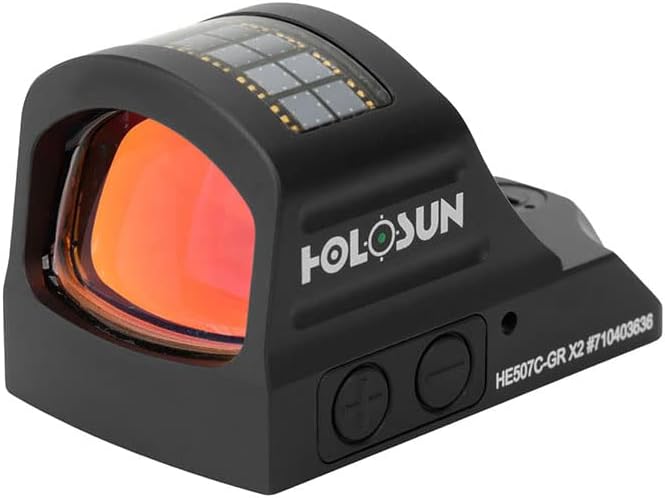
The 507C delivers versatility with its multi-reticle system and strong durability, making it one of the best value choices.
Specs:
- Dot: 2 MOA / 32 MOA circle
- Battery: Side-load CR1632 + solar
- Footprint: RMR
- Weight: 1.5 oz
Pros:
- Multiple reticle options
- Side battery access
- Durable aluminum housing
Cons:
- Slight blue lens tint
- Buttons are small with gloves
My hands-on notes:
The circle-dot is incredibly fast for close targets. I noticed minimal parallax shift inside 15 yards. The deck height allows a usable lower-third co-witness on most setups. Buttons are tactile but a bit stiff with gloves.
What people say online:
Users love the feature set for the price. Reddit discussions often highlight reliability and battery life.
Mounting clarity:
Standard RMR footprint—widely compatible.
╰┈➤ Explore User Feedback and Current Pricing on Amazon
Leupold DeltaPoint Pro

The DeltaPoint Pro combines a large window with refined glass clarity, making it a strong contender for fast-paced shooting.
Specs:
- Dot: 2.5 MOA
- Battery: CR2032 top-load
- Footprint: DeltaPoint
- Weight: 1.9 oz
Pros:
- Exceptional glass clarity
- Large viewing window
- Robust housing
Cons:
- Expensive mounting ecosystem
- Slightly bulky
My hands-on notes:
The glass is among the clearest I’ve used. No noticeable distortion at the edges. Parallax is extremely well controlled. The deck height is higher than RMR optics, so co-witness requires taller irons.
What people say online:
Shooters appreciate the clarity and durability but note the proprietary footprint as a downside.
Mounting clarity:
Requires DeltaPoint footprint or adapter plates.
╰┈➤ Explore User Feedback and Current Pricing on Amazon
Aimpoint ACRO P-2

The ACRO P-2 is a closed emitter optic designed for maximum reliability in harsh conditions.
Specs:
- Dot: 3.5 MOA
- Battery: CR2032 (side load)
- Footprint: ACRO proprietary
- Weight: 2.1 oz
Pros:
- Fully enclosed emitter
- Extreme durability
- Outstanding battery life
Cons:
- Smaller window
- Expensive
My hands-on notes:
This optic excels in reliability. No emitter occlusion issues from debris or rain. The smaller window slows transitions slightly compared to SRO. Parallax is minimal. Co-witness works well with suppressor-height sights.
What people say online:
Widely praised for durability, especially among duty users transitioning into competition.
Mounting clarity:
Requires ACRO-specific plate.
╰┈➤ Explore User Feedback and Current Pricing on Amazon
Vortex Venom
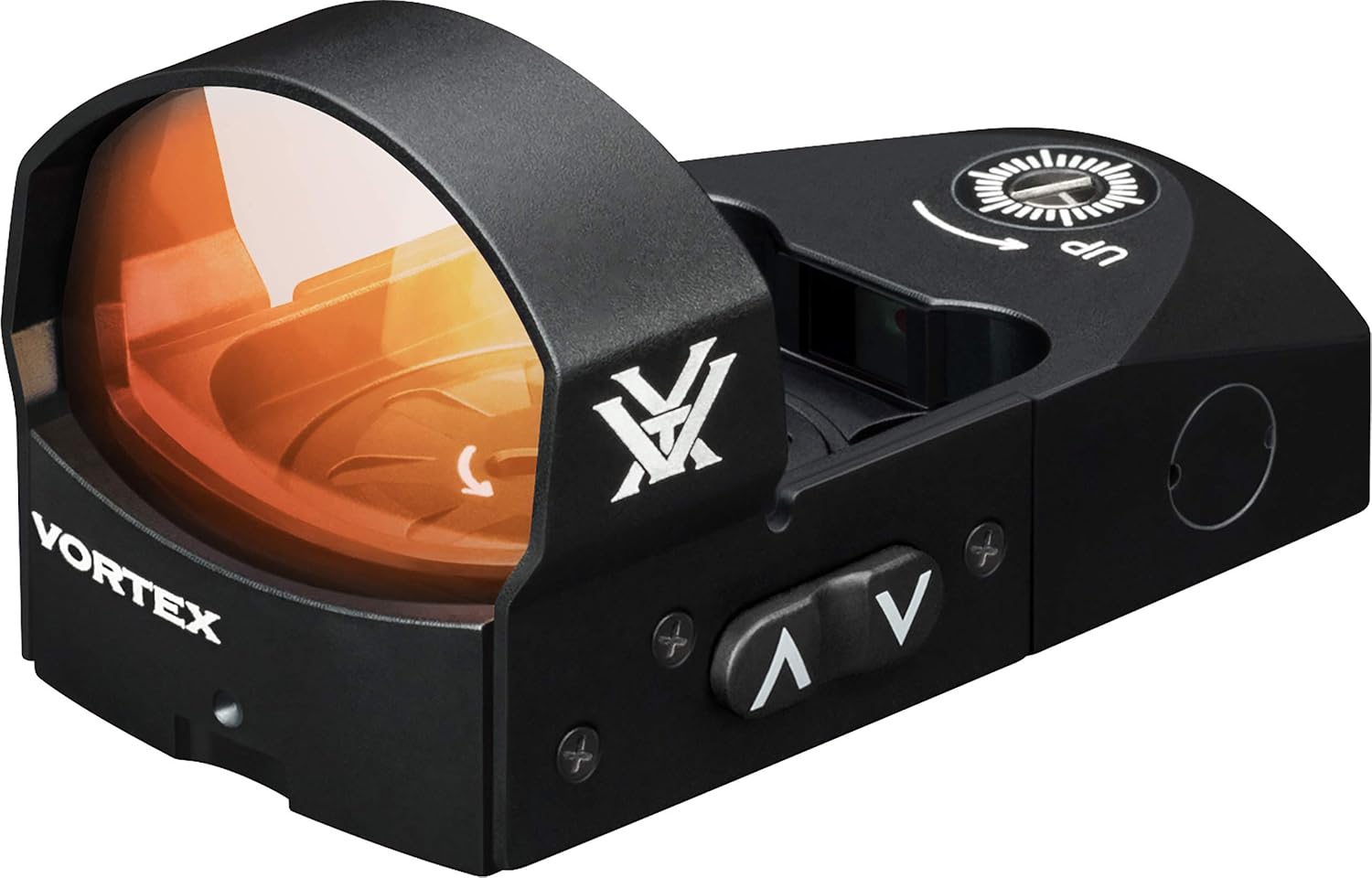
The Venom is a budget-friendly optic that still performs well in entry-level IDPA competition.
Specs:
- Dot: 3 MOA
- Battery: Top-load CR1632
- Footprint: Docter
- Weight: 1.1 oz
Pros:
- Affordable
- Lightweight
- Easy battery access
Cons:
- Less durable
- Noticeable lens tint
My hands-on notes:
The dot is clean but slightly less crisp under bright sunlight. Parallax is acceptable but more noticeable than premium optics. Co-witness depends heavily on mounting plate choice.
What people say online:
Popular among beginners. Mixed feedback on long-term durability.
Mounting clarity:
Uses Docter footprint—check compatibility carefully.
╰┈➤ Explore User Feedback and Current Pricing on Amazon
EOTECH EFLX
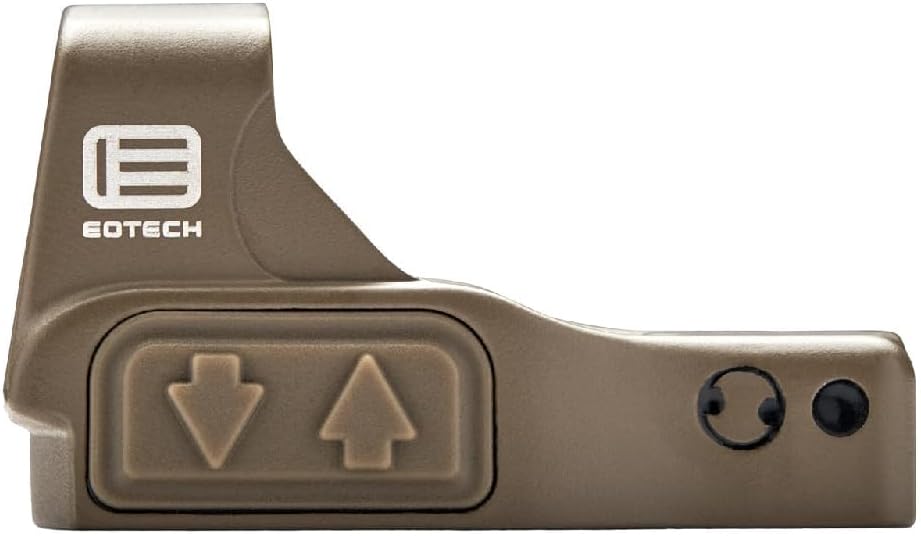
The EFLX is EOTECH’s entry into pistol optics, offering a wide window and intuitive controls.
Specs:
- Dot: 3 MOA
- Battery: CR2032 top-load
- Footprint: DeltaPoint Pro
- Weight: 1.4 oz
Pros:
- Wide window
- Simple controls
- Minimal distortion
Cons:
- Newer platform
- Limited long-term data
My hands-on notes:
The window size rivals the SRO, which helps with rapid acquisition. Button ergonomics are excellent—even with gloves. Parallax is well controlled. Co-witness aligns well with standard suppressor-height sights.
What people say online:
Early adopters praise its usability but want more long-term reliability data.
Mounting clarity:
Uses DeltaPoint Pro footprint.
╰┈➤ Explore User Feedback and Current Pricing on Amazon
How I Tested / Evaluation Criteria
Parallax:
I evaluated parallax by shifting head position while maintaining target focus at 7–25 yards. The best optics showed minimal dot movement relative to the target. Poor performers exhibited noticeable drift at window edges, which can cost time in IDPA.
Co-witness / Deck Height:
Deck height determines how naturally the optic aligns with your irons. I tested with suppressor-height sights to confirm lower-third co-witness usability. Lower deck heights generally improved draw-to-first-shot speed.
Durability:
Each optic was run through repeated recoil cycles and rapid-fire drills. I paid close attention to zero retention and housing integrity. Closed emitters clearly offered better protection against environmental interference.
Battery:
Battery type, placement, and runtime matter. Top-load designs reduce downtime, while side-load systems offer convenience. I also tested brightness stability as battery voltage dropped.
Brightness Range:
I tested in both bright daylight and low-light indoor conditions. A usable optic must have enough brightness for sunlit stages without blooming excessively in darker environments.
Glass Quality:
Clarity, tint, and distortion were evaluated side by side. High-end optics showed neutral color and minimal edge distortion, while budget options often had blue or green tint.
Controls Ergonomics:
Button size, tactile feedback, and accessibility with gloves were critical. Poor controls slow adjustments mid-stage.
Mounting Ecosystem:
Compatibility with common footprints like RMR or DeltaPoint significantly impacts usability. Proprietary systems require more planning.
How to Choose the Right Red Dot for This Gun
Choosing the right optic for IDPA isn’t just about specs—it’s about how those specs translate into performance under pressure. First, prioritize window size. A larger window makes it easier to track the dot during recoil and transitions. That’s why optics like the SRO and EFLX feel faster in real stages.
Next, consider dot size. A 2–3 MOA dot is ideal for IDPA because it balances precision and speed. Larger dots are faster up close but can obscure smaller targets at distance.
Footprint compatibility is another critical factor. If your slide is cut for RMR, sticking with that footprint saves time and money. Adapter plates introduce additional height, which affects co-witness and presentation.
Durability matters, but IDPA doesn’t require military-grade ruggedness. Open emitters are perfectly viable as long as you maintain them. However, if you shoot in rain or dusty environments, a closed emitter like the ACRO P-2 offers peace of mind.
Battery access is often overlooked. Top-load or side-load batteries allow you to swap without removing the optic, preserving zero. This is a major advantage during a competition season.
Finally, consider ergonomics. Can you adjust brightness quickly? Are the buttons intuitive? These small details matter when you’re on the clock.
FAQs
1. What MOA dot is best for IDPA?
2–3 MOA is ideal. It offers a good balance between precision and speed.
2. Are closed emitter optics better for IDPA?
Not necessarily. They are more durable, but open emitters are lighter and often have larger windows.
3. Do I need suppressor-height sights?
Yes, for co-witness. They help if the optic fails during a stage.
4. Is battery life important for competition?
Absolutely. You don’t want failures mid-match. Look for optics with long runtimes.
5. What footprint is most common?
RMR is the most widely supported footprint.
Conclusion
After extensive testing and real-world use, the Best Red Dot for IDPA comes down to your priorities: speed, clarity, and reliability. If you want maximum performance, the SRO stands out. If you need durability, the ACRO P-2 is unmatched. For value, the Holosun 507C is hard to beat.
Each optic here can perform at a high level—but the best one is the one that matches your shooting style and setup.